Why Homemade Popsicles Turn Icy (and the Science of Making Them Creamy)
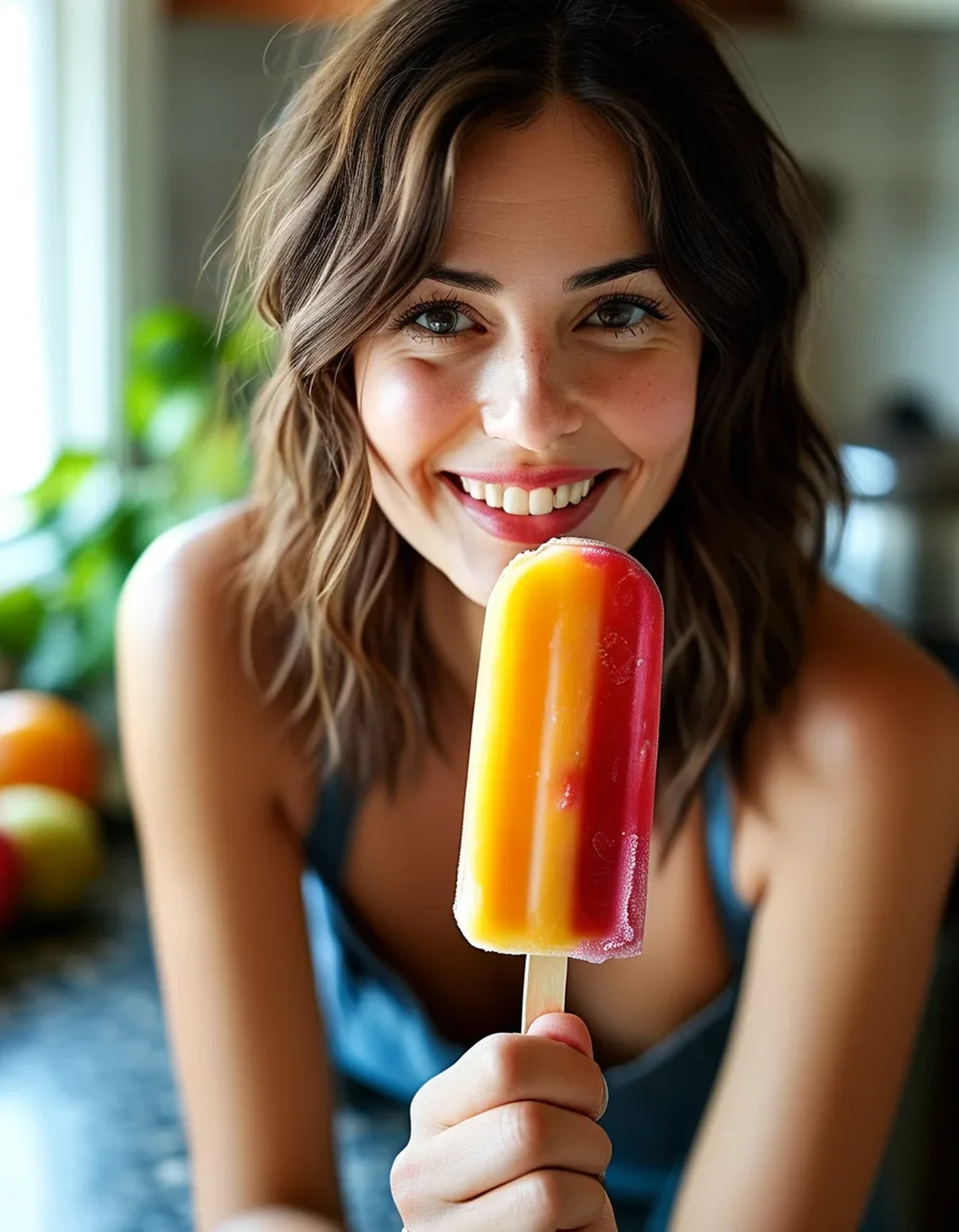
Quick Answer: Iciness is crystal size: slow-freezing, mostly-water mixtures grow big crunchy ice crystals, while creamy pops keep crystals microscopic using four levers - enough sugar (it depresses the freezing point and physically interrupts crystal growth; aim for roughly one part sugar to four parts liquid including the fruit’s own), some fat (yogurt, coconut milk, nut butter - it coats crystals and reads as creamy on the tongue), body from solids and fiber (banana, mango, chia - they crowd out big-crystal formation), and the fastest freeze your setup allows (pre-chilled base, coldest freezer shelf, small molds). Diet juice frozen slowly is a crunchy brick by physics, not by bad luck.
The blender tasted perfect - ripe peaches, a squeeze of honey, gorgeous. Twelve hours later the mold surrenders a pale, crunchy slab of fruit-flavored ice that shatters instead of yields. Nothing went wrong in the kitchen. Something went predictably in the freezer, and it is the same something every time.
What is actually different between icy and creamy?
One variable, visible under a microscope: crystal size.
All frozen treats are ice - the question is the grain. When water freezes slowly and undisturbed, molecules have time to migrate and assemble into large, orderly crystals: the crunchy, glassy texture of an ice cube, or of your peach slab. When freezing is fast and the water is crowded with interference, crystals stay tiny - below the size your tongue can resolve individually - and the same frozen water reads as smooth, dense, creamy. Every trick in frozen-dessert history is a crystal-interference scheme.
Commercial products cheat twice. Factory pops and ice creams freeze at brutal speeds in blast systems no home freezer approaches, and their formulas carry stabilizers - gums, starches, proteins - whose entire job is crowding water molecules so crystals cannot organize. Homemade versions have neither advantage by default, which is why the fruit-juice-in-a-mold experiment reliably disappoints: it is nearly pure water, frozen slowly, with zero interference. The physics never had a chance to produce anything but a brick.
Your tongue also grades warmth and coating. Fat melts on contact and coats the palate, which the brain files as creamy independent of crystal size; very cold, fat-free ice pulls heat fast and reads harsh. This is why the same pop straight from the freezer tastes icier than after two minutes on the counter - and why the fat lever below buys more perceived creaminess per gram than any other.
The empowering summary: you cannot buy a blast freezer, but three of the four crystal-interference levers live in the blender, and the fourth is freezer strategy. Icy is not a recipe flaw; it is an unworked lever.
How do the four levers actually work?
In order of power.
Lever one: sugar - the freezing-point engineer. Dissolved sugar gets between water molecules and physically disrupts crystal assembly while lowering the freezing point, keeping a fraction of the mixture unfrozen as microscopic syrup between crystals - which is exactly the difference between scoopable and rock-hard. The working ratio: total sugars around 20 to 25 percent of the mixture, counting the fruit’s own - ripe mango and banana arrive halfway there; lemon and berries need help. Honey and maple work harder than granulated (their fructose depresses freezing further); a spoonful of corn syrup adds chew and gloss, which is its actual job in commercial pops. Cut sugar below about 15 percent and physics sends the brick, regardless of technique.
Lever two: fat - the coat and the cushion. Full-fat yogurt, coconut milk, cream, or nut butter coats forming crystals, slows their growth, and melts on the tongue as creaminess itself. Even 10 to 20 percent of the mix as a fatty ingredient transforms texture - the difference between a fruit ice and a fruit cream bar is usually just this lever.
Lever three: solids and fiber - the crowd. Pureed banana, mango, avocado, roasted fruit, chia (soaked, it gels free water outright), Greek yogurt’s protein, even a pinch of salt - everything dissolved or suspended in the water is one more obstacle in the crystal’s way. This is why thick-puree pops beat juice pops at identical sugar levels, and why the blender should run long enough to make the base genuinely smooth: unblended chunks are dilute watery zones that freeze coarse.
Lever four: speed - the one in the freezer. Chill the base in the fridge before molding (warm mix spends its first freezer hour just cooling - prime crystal-growing time), use the coldest shelf against the back wall, keep the door shut for the first hours, and prefer smaller molds, which freeze through faster and finer. Skip the crank-the-freezer trick if it risks your groceries; the pre-chill plus placement gets most of the speed win free.
Myth vs Fact: Popsicle Edition
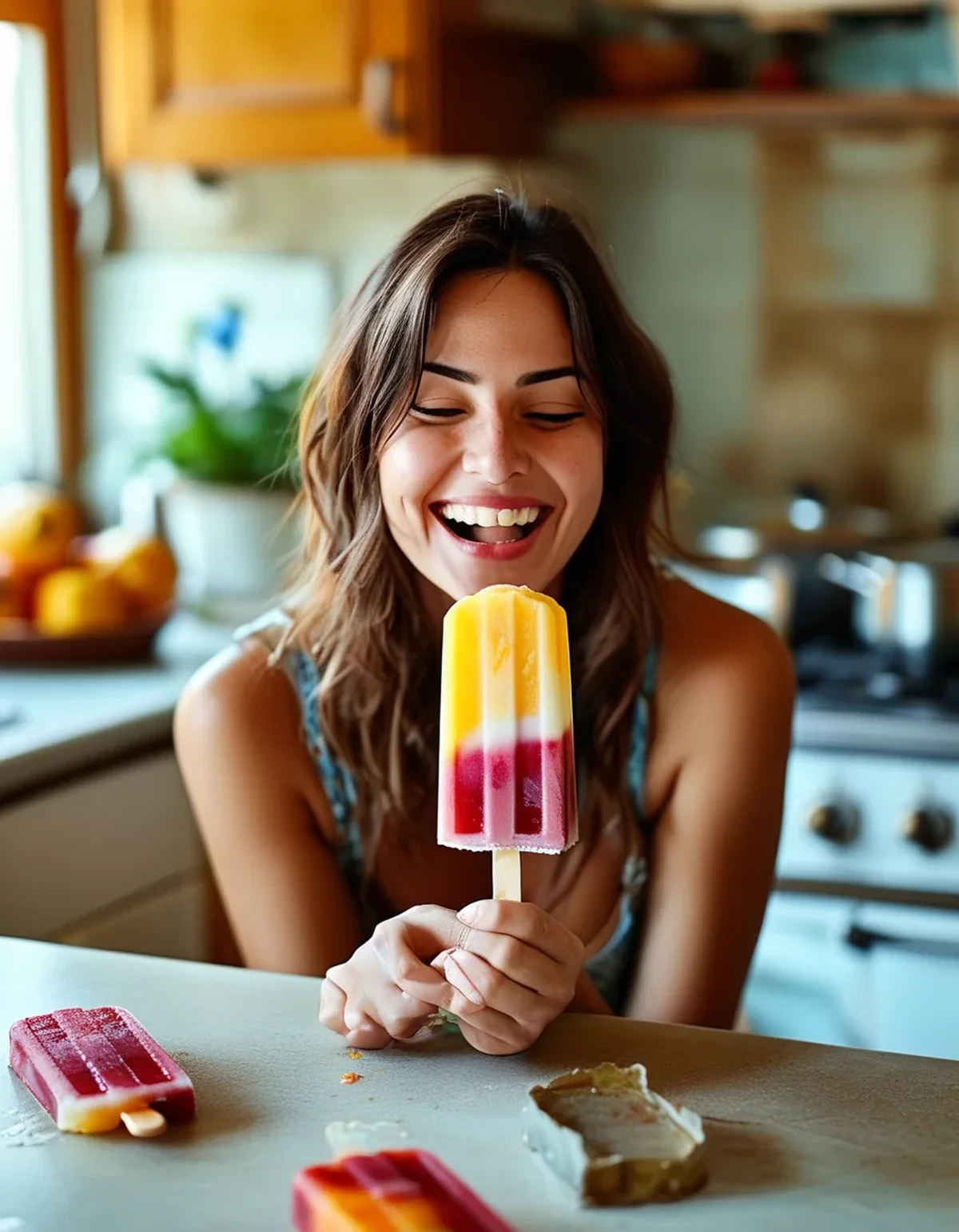
Myth: 100 percent fruit, no added sugar, will still be creamy if the fruit is sweet enough. Fact: Sometimes - and only when the fruit brings both sugar and body. Pure ripe mango or banana puree can carry a pop alone; watermelon or apple juice cannot, whatever their sweetness, because they are structurally water. The test is the base’s thickness at room temperature: pourable-like-juice freezes icy, spoonable-like-smoothie freezes creamy. Sweetness you can taste; structure you can see.
Myth: Sugar-free means accepting rock-hard. Fact: Softness needs freezing-point depression and interference, not sugar specifically. Sugar-free routes that work: lean on fat and solids harder (coconut milk and avocado bases), add soaked chia, use a spoonful of allulose (it depresses freezing point much like sugar), or a small splash of alcohol for adult pops - a tablespoon of liqueur per batch noticeably softens. What fails is diet soda or zero-cal lemonade in a mold: sweet-tasting water is still water.
Myth: Iciness means the freezer is not cold enough. Fact: Usually the opposite problem - the base was wrong, and no temperature fixes a juice-only formula. A colder, faster freeze produces finer crystals from a good base; from a watery one it produces a slightly finer brick. Fix the blender first, the freezer second.
Myth: Store pops are just frozen juice, so mine should work too. Fact: Read the ingredient list: gums, starches, syrups, and stabilizer systems - a small chemistry set devoted to crystal interference - plus industrial blast freezing. The store pop is an engineered object. Yours can match it with the four levers; it just cannot match it with juice alone.
Myth: Once icy, always icy - eat the evidence and move on. Fact: Icy batches are fully recyclable: melt them back down, re-blend with a banana, a few spoons of yogurt, or a tablespoon of honey - working the levers the first version skipped - and refreeze chilled, in the back. Round two routinely comes out transformed, which is also the cheapest way to learn exactly which lever your recipe was missing.
What are the reliable formulas - and the healthy versions that still work?
Three templates that respect the physics, tuned for late August fruit.
The fruit-cream template (the crowd-pleaser): two parts thick fruit puree - peak-season peaches, mango, roasted plums, macerated berries - to one part full-fat Greek yogurt or coconut milk, sweetened to about a 20 percent total with honey, plus a squeeze of lemon and a pinch of salt to make the fruit taste louder. Every lever engaged: fruit brings solids, yogurt brings fat and protein, honey finishes the sugar math. This template converts whatever the market glut hands you - and August hands you plenty.
The all-fruit template (the clean one): ripe banana or mango as the structural base - one banana per two to three pops - blended dead smooth with the feature fruit and just enough honey to reach the ratio if the fruit runs tart. No dairy, no refined sugar, still creamy, because the base fruit is doing the solids-and-sugar work. Strawberry-banana and mango-lime are the canonical proofs.
The fudge-adjacent template (the protein sneak): banana, cocoa powder, a spoonful of peanut butter, milk or fortified oat milk to blend, optional scoop of chocolate protein powder - which, bonus, is itself a crystal-crowding solid. Freezes into something closer to a fudge bar than a pop, and audits as a decent snack: this is the template for the post-practice freezer stash.
Universal technique notes: blend longer than feels necessary; chill the base fully before molding; tap filled molds on the counter to release air pockets (they become crumbly zones); back of the freezer, overnight, no peeking. Unmold with a five-second warm-water dip rather than force. And serve with ninety seconds of counter patience - every pop, even the perfect ones, tastes creamier just short of rock-solid.
The batch-economy footnote: molds cost little, peak-glut fruit costs less, and a Sunday double-batch stocks two weeks of after-dinner and after-camp treats at pennies each - engineered by you, with a sugar number you chose on purpose. The blender was never the problem; now the freezer is not either.
FAQ: Homemade Popsicle Questions, Answered
Why are my homemade popsicles so icy?
Because the base was mostly water and it froze slowly - big ice crystals had time and room to grow. Fix it with the four levers: sugar around 20 percent of the mix (counting fruit sugar), some fat like yogurt or coconut milk, thick blended solids instead of juice, and a fast freeze - chilled base, small molds, coldest back shelf. Juice-only pops are icy by physics.
How do I make creamy popsicles without cream or dairy?
Build the base on structural fruit - banana, mango, or avocado - which brings the solids and much of the sugar, and consider coconut milk or nut butter for the fat lever. Blend completely smooth, sweeten to the ratio with honey or maple, chill, and freeze fast. Soaked chia is the bonus trick: it gels free water and adds body invisibly.
How much sugar do popsicles need to not freeze rock hard?
Aim for total sugars - fruit’s own included - around 20 to 25 percent of the mixture; below roughly 15 percent, pops freeze very hard and icy. Ripe mango and banana arrive close to target on their own, tart fruits need topping up, and honey or a spoonful of corn syrup soften more per gram than granulated sugar. A brief counter rest before serving covers the last bit of hardness.
Can I fix a batch that came out icy?
Yes - melt it down, re-blend with whichever lever it lacked (a banana for solids, yogurt for fat, a tablespoon of honey for sugar), chill the new base, and refreeze in the back of the freezer. Rescued batches routinely beat the originals, and the exercise tells you exactly how to fix the recipe permanently.
TL;DR:
- Icy versus creamy is crystal size: slow-frozen watery bases grow crunchy crystals; crowded, fast-frozen bases stay smooth.
- The four levers: sugar at ~20-25 percent total (fruit counts), some fat, thick blended solids, and the fastest freeze available.
- Juice in a mold is a brick by physics; banana, mango, and yogurt are the structural heroes.
- Chill the base, tap out air, back shelf overnight, warm-water unmold, ninety seconds of counter patience.
- Icy batches melt down and re-blend into redemption - the cheapest texture lesson in the kitchen.
The blender was always telling the truth about the flavor. Give the freezer a base it cannot ruin, and the August fruit glut becomes a stocked freezer of pops that yield instead of shatter.
Keep Reading
This article is for general informational purposes only and is not medical advice. Always consult a qualified health professional for guidance specific to you.