Why Homemade Nice Cream Turns Icy Instead of Creamy (The Actual Fix, Not Just 'Blend Longer')
Homemade banana nice cream turning out icy and grainy rather than smooth and creamy gets blamed on not blending long enough, and that’s usually not the actual root cause. The real issue is more specific and more fixable. Here is the actual science behind creamy versus icy texture, and the technique that consistently works, per the why-homemade-nice-cream-gets-icy-guide logic.
The Actual Science Behind Creamy Versus Icy Texture
The real mechanism: the ice-crystal-size-not-blending-duration-is-the-actual-determining-factor-for-texture (the perceived creaminess versus iciness in any frozen dessert actually determined by ice crystal size — smaller crystals read as creamy, larger crystals read as icy or grainy — a factor that blending time alone doesn’t fully control — the ice-crystal-size-is-the-actual-underlying-variable-not-simply-how-long-something-gets-blended), the the-banana-ripeness-and-water-content-significantly-affects-how-large-ice-crystals-form-during-freezing (the riper bananas generally having different sugar and water content than less ripe ones, which affects how ice crystals form during the freezing process before blending even begins — the banana-ripeness-affects-crystal-formation-during-freezing-itself-before-the-blending-step-even-starts), the the-freezing-temperature-consistency-and-speed-affects-crystal-size-independent-of-the-fruit-itself (the freezer temperature consistency and how quickly the bananas actually freeze affecting resulting ice crystal size, a variable entirely separate from both banana ripeness and blending technique — the freezing-speed-and-temperature-consistency-is-a-third-independent-variable-affecting-crystal-size-beyond-both-banana-ripeness-and-blending), and the reframe (the icy texture as primarily a function of ice crystal size shaped by banana ripeness and freezing conditions, not primarily a blending-duration problem — meaning blending longer often doesn’t fix a problem that started well before the blending step).
The Technique That Consistently Works
What actually fixes it: the use-fully-ripe-bananas-with-visible-brown-spotting-rather-than-just-yellow (the choosing bananas at a genuinely more ripe stage, with visible spotting, rather than simply yellow and firm, since riper bananas generally produce a creamier result once frozen and blended — the using-genuinely-riper-spotted-bananas-rather-than-just-yellow-firm-ones-is-one-of-the-highest-leverage-fixes), the the-slice-bananas-before-freezing-rather-than-freezing-whole-for-more-even-and-faster-freezing (the pre-slicing bananas into smaller pieces before freezing promoting faster, more even freezing throughout, which tends to produce smaller, more consistent ice crystals than freezing whole bananas — the pre-slicing-before-freezing-promotes-faster-more-even-freezing-which-tends-to-produce-smaller-more-consistent-ice-crystals), the the-add-a-small-amount-of-a-genuinely-creamy-fat-or-liquid-component-rather-than-relying-on-banana-alone (the incorporating a small amount of a fat or creamy liquid component — a splash of milk or a spoon of nut butter — physically interfering with large ice crystal formation in a way pure frozen banana alone doesn’t achieve — the adding-a-small-fat-or-creamy-liquid-component-physically-interferes-with-large-ice-crystal-formation-in-a-way-pure-banana-alone-doesnt), the the-use-a-food-processor-or-high-powered-blender-and-work-in-short-controlled-bursts-rather-than-one-long-continuous-blend (the working in short controlled bursts with scraping down between them generally producing a more even final texture than one long continuous blend that can actually reheat and refreeze the mixture unevenly — the short-controlled-bursts-with-scraping-generally-outperform-one-long-continuous-blend-for-even-final-texture), and the transition (the technique as riper spotted bananas, pre-slicing before freezing, a small fat or creamy liquid component, and short controlled blending bursts — though a good batch can still turn icy afterward through poor storage).
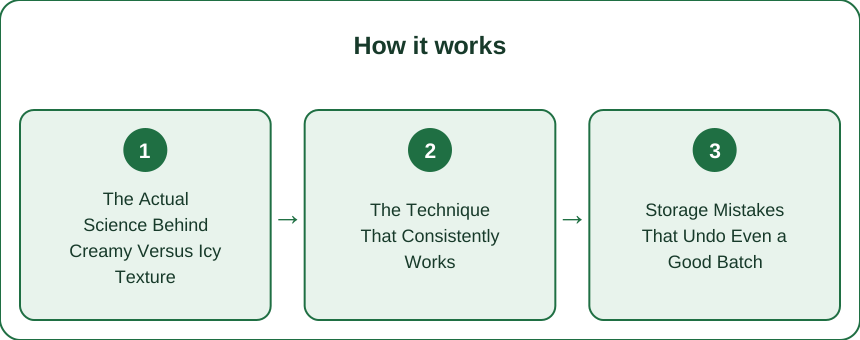
Storage Mistakes That Undo Even a Good Batch
Where it goes wrong after the fact: the the-storing-in-a-wide-shallow-container-exposes-more-surface-area-to-temperature-fluctuation-than-a-narrow-deep-one (the storing the finished nice cream in a wide, shallow container exposing significantly more surface area to the freezer’s temperature fluctuations from door-opening and defrost cycles than a narrower, deeper container does, accelerating re-formation of larger ice crystals after the fact — the a-wide-shallow-storage-container-exposes-more-surface-area-to-temperature-fluctuation-and-accelerates-post-storage-crystal-growth-compared-to-a-narrow-deep-one), the the-not-pressing-a-layer-of-plastic-wrap-directly-onto-the-surface-before-sealing-lets-frost-form-on-top (the leaving air space between the nice cream’s surface and the container lid allowing moisture to migrate and refreeze as surface frost, while pressing plastic wrap directly onto the surface before sealing the lid largely prevents that specific pathway — the pressing-plastic-wrap-directly-onto-the-surface-before-sealing-prevents-the-surface-frost-that-forms-in-an-open-air-gap), and the frame (the storage fixes as choosing a narrower, deeper container over a wide shallow one, and pressing plastic wrap directly onto the surface before sealing — protecting a properly made batch from turning icy again after the fact through the freezer’s ordinary temperature fluctuations).
Icy, grainy nice cream texture is primarily determined by ice crystal size rather than blending duration alone — riper bananas with different sugar and water content affect how ice crystals form during freezing before blending even starts, and freezer temperature consistency and freezing speed independently affect resulting crystal size, meaning blending longer often can’t fix a texture problem that started well before the blending step. The actual fix is using genuinely ripe, spotted bananas rather than just yellow and firm ones, pre-slicing bananas into smaller pieces before freezing to promote faster and more even freezing that tends to produce smaller, more consistent ice crystals, adding a small amount of a fat or creamy liquid component like a splash of milk or a spoon of nut butter to physically interfere with large ice crystal formation, and blending in short controlled bursts with scraping down between them. Even a properly made batch can turn icy afterward through poor storage, so choosing a narrower, deeper container over a wide shallow one and pressing plastic wrap directly onto the surface before sealing the lid protects it from the freezer’s ordinary temperature fluctuations.
Keep Reading
This article is for general informational purposes only and is not medical advice. Always consult a qualified health professional for guidance specific to you.