Why Homemade Popsicles Turn Out Icy Instead of Creamy (and the Fix)
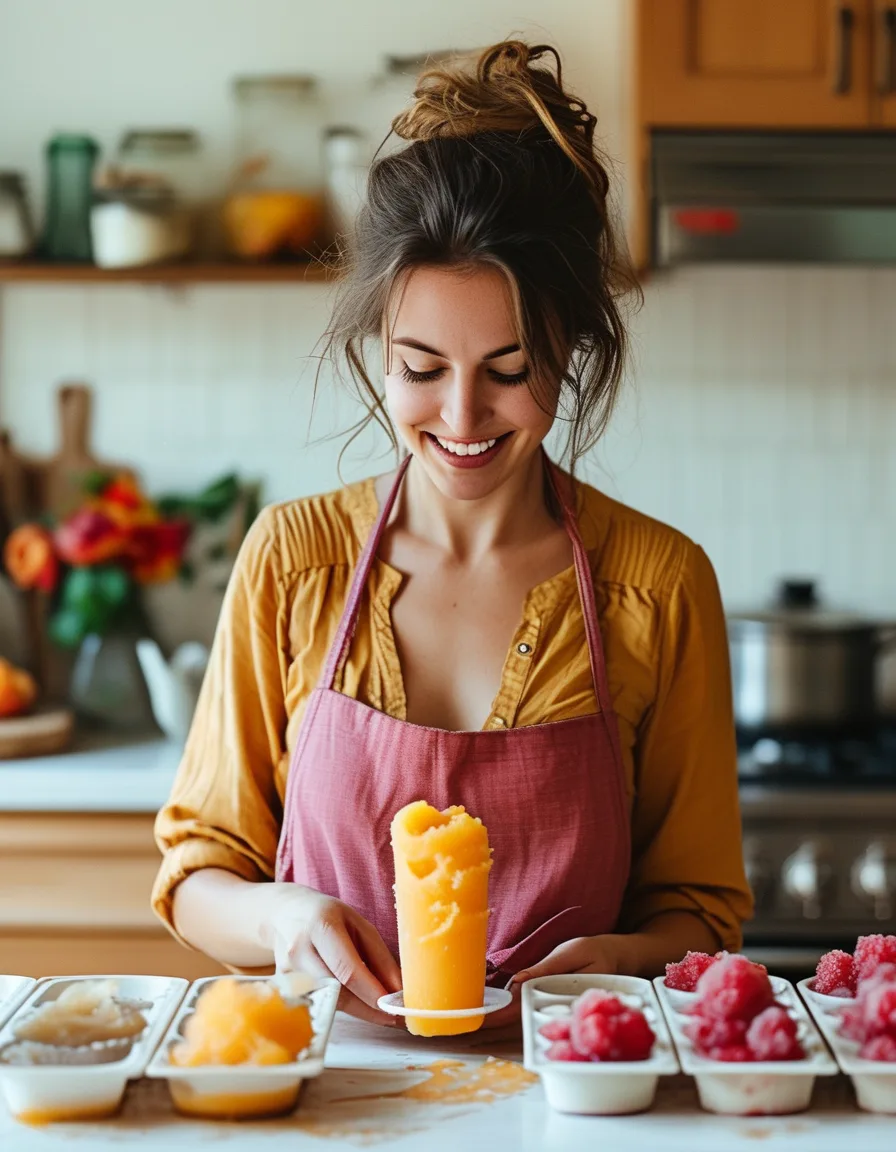
Homemade popsicles almost always freeze harder and icier than the store-bought version, even using the same fruit. That’s not a fluke of home freezers — it comes down to a few specific ingredients commercial popsicles include that most homemade recipes skip entirely, and each one changes the texture in a predictable way.

Why Pure Fruit Puree Freezes Icy
The science: the the-high-water-content-forms-large-crystals (the fresh fruit’s naturally high water content freezing into larger ice crystals than a formulated mix would, per general food-science principles on freezing and crystal size), the the-no-freezing-point-depression (the commercial popsicles including sugar and sometimes a small amount of alcohol or corn syrup specifically to lower the freezing point and slow crystal formation, an ingredient category most homemade recipes omit), the the-no-stabilizer-or-fat (the commercial versions often including a small fat or stabilizer component that homemade fruit-only recipes lack entirely, which is part of what gives store versions their smoother bite).
The Ratio Adjustments That Fix It
The specific fixes: the the-sugar-content-for-texture-not-just-sweetness (the increasing sugar slightly beyond taste preference specifically to lower the freezing point, a texture lever as much as a flavor one), the the-adding-a-small-fat-component (the stirring in a small amount of yogurt, coconut milk, or cream into a fruit base measurably softening the final texture), the the-corn-syrup-or-honey-substitution (the swapping a portion of granulated sugar for corn syrup or honey, both of which resist crystallization more than plain sugar).
Getting the Ratio Right Without Guessing
The practical starting point: the the-roughly-15-to-20-percent-sugar-by-weight (a rough starting ratio of 15-20% sugar by weight of the fruit base as a texture-focused benchmark, adjustable to taste from there), the the-blend-thoroughly-for-even-distribution (the fully blending rather than just mixing, ensuring the sugar and fat are evenly distributed rather than pooling), and the frame (icy popsicles are a ratio problem, not a technique problem — fix the formula, not the freezing process).
Homemade popsicles freeze icier than store-bought ones for a specific, fixable reason: pure fruit puree has high water content that forms large ice crystals, and it’s missing the sugar concentration, fat, or stabilizer that commercial recipes use to lower the freezing point and slow crystal formation. The fix isn’t a different freezer or a different fruit — it’s adjusting the ratio. Pushing sugar content slightly higher than taste preference alone would suggest, stirring in a small amount of yogurt, coconut milk, or cream, and swapping part of the sugar for corn syrup or honey all measurably soften the final texture. A rough starting benchmark of 15 to 20 percent sugar by weight of the fruit base gives a texture-focused ratio to adjust from. The icy texture was never a freezing-process problem — it was a formula problem the whole time. Why Homemade Popsicles Turn Out Icy Instead of Creamy (and the Fix).
Keep Reading
This article is for general informational purposes only and is not medical advice. Always consult a qualified health professional for guidance specific to you.