Frozen Treats and Portion Control: Why 'Healthy' Doesn't Mean Unlimited
Quick Answer: A reasonable portion for most homemade frozen treats — nice cream, yogurt bark, protein ice cream — is roughly 1/2 to 3/4 cup, similar to a standard dessert portion. ‘Healthy’ ingredients don’t change the calorie math at large volumes; they mainly improve the nutrient quality within a normal-sized serving.
Banana nice cream feels like it should be exempt from portion thinking entirely — it’s just frozen fruit, after all. But a full blender’s worth eaten in one sitting is still a large amount of concentrated natural sugar, and portion size matters even when every ingredient is genuinely wholesome.
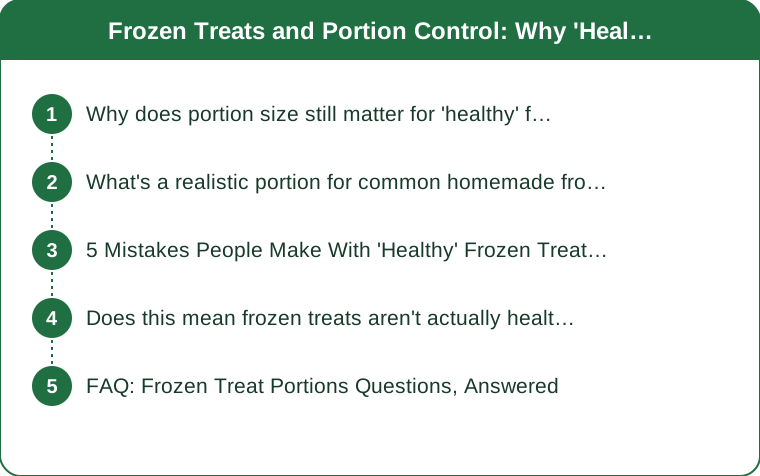
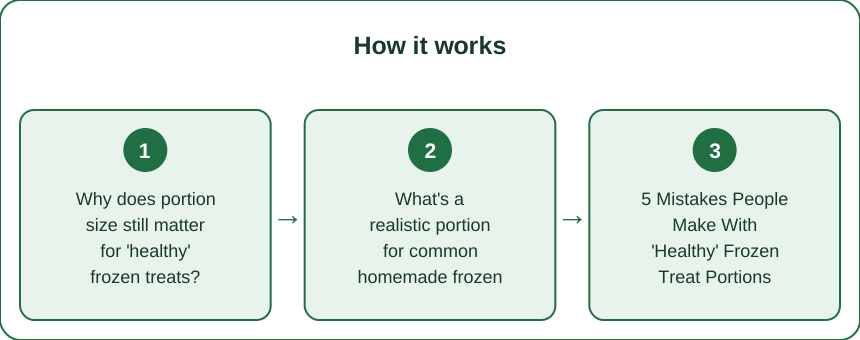
Why does portion size still matter for ‘healthy’ frozen treats?
Ingredient quality and portion size are two separate variables. A treat made from real fruit and yogurt is nutritionally better than one loaded with syrups and additives at the same serving size — but doubling or tripling that serving still doubles or triples the sugar and calorie load, regardless of how clean the ingredient list looks.
What’s a realistic portion for common homemade frozen treats?
Nice cream: about 1 cup, roughly one medium frozen banana blended. Yogurt bark: 3-4 pieces from a standard tray, not the whole sheet. Protein ice cream: 1/2 to 3/4 cup, similar to a regular ice cream scoop.
These aren’t rigid rules — they’re a reasonable starting reference point if you’re eating intuitively but want a rough anchor.
5 Mistakes People Make With ‘Healthy’ Frozen Treat Portions
1. Eating straight from the blender or container — no visual portion cue means it’s easy to eat 2-3x a normal serving without noticing.
2. Assuming ‘no added sugar’ means unlimited — natural fruit sugar still adds up in large volumes.
3. Treating it as a zero-calorie swap for regular ice cream and therefore eating a much larger amount than you would of the original.
4. Skipping protein or fiber alongside it, which means the treat alone doesn’t create real fullness, encouraging a second helping.
5. Making treats in bulk ‘to have on hand,’ which removes the natural portion boundary a single fresh batch creates.
Does this mean frozen treats aren’t actually healthy?
No — homemade versions are still meaningfully better than most store-bought options loaded with stabilizers, added sugars, and low-quality fats. The point isn’t that they’re unhealthy; it’s that ‘healthy’ and ‘unlimited’ are two different claims, and treating them as the same one leads to portions that undercut the benefit.
FAQ: Frozen Treat Portions Questions, Answered
Is it fine to eat a healthy frozen treat every day?
Generally yes at a reasonable portion, especially if it’s replacing a less nutritious dessert — daily frequency matters less than portion size and overall diet context.
How can I actually control portions without measuring every time?
Pre-portioning into small containers right after making a batch removes the need to measure at the moment you’re actually eating, which is when portion control is hardest.
Does eating frozen treats slowly change how much you eat?
Yes — frozen treats take longer to eat than room-temperature food by nature, which naturally gives satiety signals more time to catch up, one reason they can feel more satisfying per portion than expected.
TL;DR:
- Healthy ingredients and portion size are separate variables — both matter
- Roughly 1/2-1 cup is a reasonable reference portion for most homemade frozen treats
- Eating straight from the container removes the visual portion cue that normally limits intake
- Pre-portioning right after making a batch is easier than measuring in the moment
A genuinely healthy treat stays healthy at a normal portion — the sugar math doesn’t care how wholesome the ingredient list looks at triple the serving.
Keep Reading
This article is for general informational purposes only and is not medical advice. Always consult a qualified health professional for guidance specific to you.