Frozen Treats Made With Early Autumn Fruit: What Actually Works
Quick Answer: Autumn fruit is lower in sugar, higher in pectin, and much lower in water-soluble flavour than summer berries, which is why a straight swap gives you a bland ice block. Fix it with three adjustments: cook the fruit first to concentrate flavour and break down pectin, add 15-20% more sweetener by weight than a berry recipe calls for, and include something with body - yoghurt, a spoon of nut butter, or a little alcohol - to keep the texture scoopable. Plums and roasted pears work best. Raw apple works worst.
The end of berry season does not have to be the end of homemade frozen things. It does mean the recipes you have been using since June will stop working, and the reason is chemistry rather than technique.

Why does autumn fruit freeze so differently?
Four properties, and they all push in the same unhelpful direction.
Lower free sugar. Sugar is what depresses the freezing point and keeps a frozen dessert soft. A ripe strawberry purée has enough dissolved sugar to stay scoopable; a raw apple purée freezes into a solid brick. This is the single biggest difference.
Higher pectin. Apples and quince are pectin-rich, which is wonderful for jam and unhelpful here - it makes purées gluey and can produce a strange gummy texture in a popsicle.
Denser flesh, less free water. Berries are largely water with flavour dissolved in it. Apples and pears hold their water in a firmer cell structure, so the flavour does not release the same way when blended raw.
Flavour compounds are less volatile. Berry aromatics are bright and release readily. Autumn fruit flavour is deeper and much of it only develops with heat - which is exactly why a raw apple purée tastes of almost nothing and a roasted one tastes intensely of apple.
Add the cold factor: we perceive sweetness and aroma less at low temperature. Any frozen dessert tastes less sweet than the mix did, and a subtly flavoured autumn fruit has less margin to lose.
Which autumn fruits actually work?
There is a clear ranking, and it is worth following rather than experimenting from scratch.
Best: plums and damsons. High acidity, decent sugar, and flavour that intensifies rather than flattens when frozen. A cooked plum purée makes genuinely excellent sorbet and popsicles with minimal help.
Very good: roasted pears. Roasting concentrates the sugars and develops flavour dramatically. A roasted pear purée with a little lemon makes one of the best autumn sorbets there is. Raw pear is bland and grainy - the difference between the two is enormous.
Good with help: blackberries. Technically late summer, and they behave like a berry. Excellent flavour, but seedy - sieve them.
Good with help: figs. Rich and sweet, but low acid, so they need lemon to stop tasting flat. Pair with yoghurt.
Difficult: apples. High pectin, low free sugar, and mild flavour. Cooked apple works as a component, not as the main event - fold it into a yoghurt base rather than trying to make apple sorbet.
Difficult: quince. Wonderful flavour, but it must be cooked for a long time and it sets hard. Use it as a ripple rather than a base.
How do you get the texture right?
Three levers, and you usually need at least two of them.
Sugar, and more than you would use for berries. Aim for roughly 20-25% sugar by weight of the total mix for a sorbet, which is often 15-20% more than a berry recipe. This is not only for sweetness - it is the primary anti-freeze in the mix, and cutting it is the most common reason a homemade sorbet turns into a block.
An invert sugar helps more than table sugar. A tablespoon of honey, golden syrup, or glucose syrup substituted for some of the sugar improves softness noticeably, because invert sugars depress the freezing point more effectively per gram.
Fat or protein for body. Full-fat yoghurt, a spoon of nut butter, coconut milk, or a little cream. This interrupts ice crystal formation and is what separates a creamy result from an icy one. Greek yoghurt is the easiest option and it pairs particularly well with plum and fig.
A small amount of alcohol. One tablespoon of vodka or a fruit brandy per 500g of mix lowers the freezing point without affecting flavour. More than that and it will not freeze properly.
And churn or stir. If you have no machine, stir the mix every 30 minutes for the first two hours in the freezer. This is the difference between granita and sorbet and it costs four minutes of attention.
5 Mistakes Everyone Makes With Autumn Fruit
1. Using raw fruit. The single biggest one. Cook or roast everything except plums and berries. Twenty minutes of roasting transforms pear and apple from bland to intense, and it breaks down the pectin that makes purées gluey.
2. Reducing the sugar to be healthier. Sugar in a frozen dessert is structural, not just a flavour. Cut it by a third and you have made a flavoured ice cube. If you want less sugar, make a smaller portion rather than a lower-sugar mix.
3. Forgetting acid. Autumn fruit is generally lower in acid than summer fruit, and acid is what makes flavour read as bright rather than flat. A tablespoon of lemon juice per 500g is a minimum, and it is the fastest fix for a mix that tastes dull.
4. Not tasting the mix warm and cold. The mix should taste slightly too sweet and slightly too strong at room temperature, because cold flattens both. Taste, adjust, then freeze.
5. Blending in the skins. Apple and pear skins produce a gritty texture and a slightly bitter note. Plum skins are fine and add colour; apple and pear skins should come off before cooking.
What is worth making right now, specifically?
Three that work reliably and use what is actually good in the shops this month.
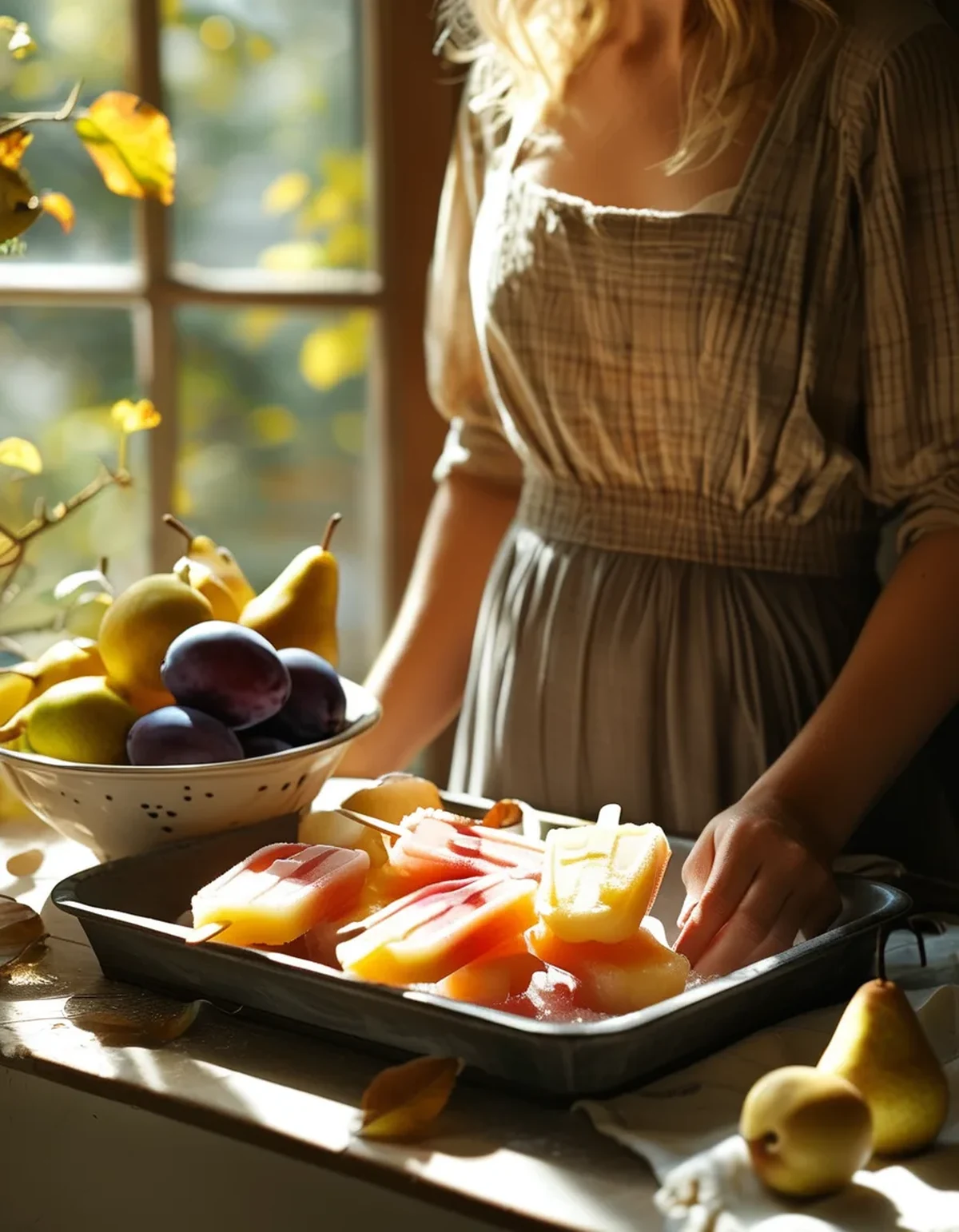
Roasted plum and yoghurt popsicles. Halve and stone 500g plums, roast at 200C for 20 minutes with 60g sugar, blend, cool, fold through 300g full-fat Greek yoghurt with a squeeze of lemon. This is the most reliably good autumn frozen thing there is and it freezes soft enough to bite.
Roasted pear sorbet. 600g pears, peeled and quartered, roasted at 200C for 25 minutes until caramelising at the edges. Blend with 120g sugar, 2 tablespoons honey, juice of a lemon, and 100ml water. Churn or stir-freeze. Deep, almost caramel flavour that people struggle to identify.
Blackberry and apple ripple. Cook apples down with a little sugar until soft, sieve blackberries into a separate purée with sugar and lemon, then layer both loosely through a yoghurt base without fully mixing. The apple carries texture, the blackberry carries flavour.
A note on freezing whole fruit for later: now is the right moment for it. Halve and stone plums, freeze on a tray, then bag - they hold flavour well for months and go straight into these recipes. Apples and pears should be cooked before freezing; raw frozen pear collapses into something unusable.
FAQ: Autumn Frozen Treats, Answered
Can I use frozen fruit from the supermarket?
Yes, and for plums and berries it is often as good as fresh. Do not thaw first - blend from frozen where the recipe allows, which reduces how much water you need to freeze out again.
How long do these keep?
Better than summer versions, because the higher sugar content protects texture. Two to three weeks in a proper airtight container with the surface covered. After that, ice crystals win.
Why does mine taste less sweet than the mix did?
Because it does - we perceive sweetness less at low temperatures. Make the mix taste slightly too sweet at room temperature and it will be correct frozen.
Does a machine really make that much difference?
For sorbet, yes - churning incorporates air and keeps crystals small. Without one, the stir-every-30-minutes method gets you most of the way, and popsicles do not need a machine at all, which makes them the better project if you have no equipment.
TL;DR:
- Autumn fruit is lower in sugar, higher in pectin, and blander raw - a straight swap from a berry recipe fails.
- Cook or roast everything except plums and berries. Roasting is what unlocks pear and apple.
- Use 20-25% sugar by weight, some of it as honey or syrup, plus acid and something with body.
- Plums are the best autumn fruit for this by a distance; raw apple is the worst.
- Taste the mix warm - it should be slightly too sweet, because cold flattens everything.
The berry season ending is a good excuse to make the better version of this. Roasted plum and yoghurt popsicles are worth the twenty minutes on their own.
Keep Reading
This article is for general informational purposes only and is not medical advice. Always consult a qualified health professional for guidance specific to you.